Spotting AI-Generated Profiles on Social Media: A 2026 Checklist
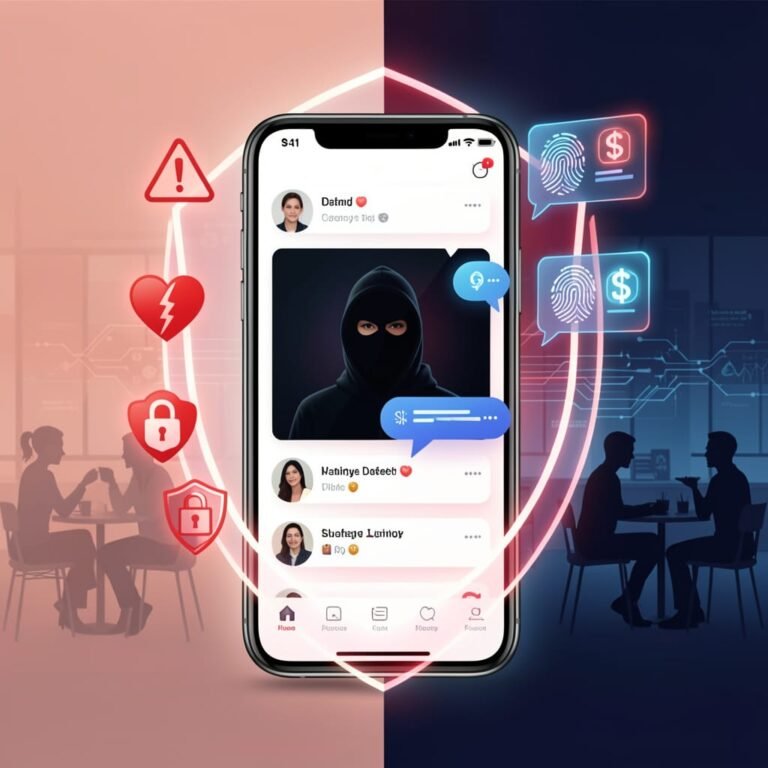
The connection request looks legitimate. A profile picture of a friendly professional. A complete work history. Several dozen mutual connections. An InMail asking to chat about a partnership. Every detail of the profile was generated by AI in under a minute, and the account is one of an estimated tens of millions of synthetic profiles active across major social platforms in 2026.
This post is a practical checklist for spotting AI-generated profiles on the platforms most people use — LinkedIn, X, Facebook, Instagram, and dating apps — and the small habits that protect your accounts, your reputation, and your network from the downstream attacks these profiles enable.
Why Synthetic Profiles Are Everywhere
AI image generators produce convincing human faces that do not exist. Language models produce believable bios, post histories, and conversational replies. Combine the two with cheap automated account creation and the result is a profile that can pass a quick human review.
Why are scammers building them at this volume? Synthetic profiles are the inventory for several scam categories at once: business-email compromise reconnaissance, romance and investment fraud, recruiter scams, influencer impersonation, and disinformation campaigns. A single inventory of profiles can be repurposed across all of these.
The Visual Tells: Inspecting the Profile Picture
AI-generated face photos have improved dramatically, but a careful look still reveals patterns.
Background irregularities. The face is often crisp, but the background blurs into impossible shapes. Look for melting walls, inconsistent shelving, or partial objects that do not resolve.
Earring asymmetry. Earrings frequently mismatch — one stud, one hoop, or one ear bare. Glasses frames sometimes have inconsistent thickness on each side.
Teeth and eyes. Teeth may have unusual spacing or count. Eyes occasionally have mismatched colors or unnatural reflections.
Hair. Strands at the edge of the face may merge into the background or float disconnected.
Reverse-image search returns nothing. Real people’s profile photos usually appear somewhere else online — old social posts, conference pages, news articles. An AI face returns no matches.
The Behavioral Tells: Inspecting the Activity
Activity history is harder to fake convincingly than a single photo. Look for these patterns:
Sparse or recent-only activity. A profile that claims a 15-year career but has only posted in the last two months is suspect. Real long-tenured professionals leave traces over time.
Generic engagement. Comments that are all variants of “great post!” with no specific reference suggest automation.
Connection patterns. Many synthetic profiles connect with other synthetic profiles first to build numbers, then begin reaching real users. Mutual connections from the same niche or region pattern can be a clue.
Job titles that do not match the company. Click through to the company’s real LinkedIn page and look for the person on the company’s public team list. Synthetic profiles often claim affiliations that the company itself does not confirm.
Practice this kind of inspection regularly with the Scam Detection Game, which includes synthetic-profile scenarios.
Platform-Specific Quick Checks
LinkedIn: Verify employment by visiting the listed company’s page and checking whether the person appears among current employees. Long careers should show recommendations and endorsements over time.
X / Twitter: Look at the post history and the dates of the first and most recent posts. A short window of activity, often around a launch or news event, is a common scam pattern.
Facebook: Inspect friend lists and tagged photos. Real accounts accumulate friends of friends over years, with photos that show consistent recurring people.
Instagram: Check the post timestamps and the relationship between posts and stories. Synthetic accounts often post infrequently and use stock-photo-feeling imagery.
Dating apps: Insist on a brief video call before any deep conversation. Many dating apps now offer in-app video verification badges — give weight to verified accounts.
What to Do When You Suspect a Synthetic Profile
Report and block. Each major platform has a report-as-fake-profile option, and reports trigger reviews that often remove synthetic accounts.
Do not engage further. The longer the conversation, the more data the operator collects to refine the next scam.
Warn your network. If the synthetic profile contacted you, others in your industry may receive the same outreach. A quick post in a private group helps colleagues recognize the pattern.
Hardening Your Own Profile
Reduce your own attack surface so synthetic profiles have less to work with:
Limit publicly visible information. Phone numbers, birthdays, family relationships, and travel plans visible on a profile feed targeting algorithms. Review your privacy settings annually.
Lock down friend requests and DMs. Most platforms allow friend requests and DMs only from connections or mutual contacts. Use those settings unless your role specifically requires open access.
Add platform-verified badges where available. A small verification step on LinkedIn (employer verification, identity verification) helps your real connections distinguish you from impersonators.
Search for impersonators monthly. Search your own name plus your employer occasionally; report duplicates immediately.
For deeper account hardening, see our passkey setup guide and our piece on SIM swap fraud prevention.
The Future: Platform Authentication and Provenance
Several major platforms are piloting stronger identity verification — employer-confirmed badges, government-ID checks, and cryptographic content credentials. These programs will not eliminate synthetic profiles but they will create a more visible distinction between unverified and verified accounts.
For users, the practical guidance for the next two years is to weight verified accounts more heavily and to treat unverified accounts as deserving the same scrutiny you would apply to a stranger handing you a business card on the street. The CISA Secure Our World initiative publishes accessible guidance on these emerging verification programs.
Stay sharp with quick, daily-friendly resources like the Did You Know? app.
Specific Scams Built on Top of Synthetic Profile Networks
Once a network of synthetic profiles exists, attackers monetize it in several ways simultaneously. Understanding the downstream uses helps explain why the synthetic-profile economy is so large.
Targeted business email compromise reconnaissance. Synthetic profiles “connect” with employees of target companies, observing posts, work milestones, and travel mentions. The information feeds personalized BEC attempts.
Investment-pitch warm-up. A synthetic profile spends weeks engaging with a target’s posts in a friendly, low-key way before introducing a financial conversation. The prior engagement builds the appearance of an existing relationship.
Disinformation campaigns. Coordinated networks of synthetic profiles amplify selected narratives during political events, often timed to influence specific news cycles.
Marketplace and influencer fraud. Synthetic profiles boost the apparent legitimacy of fraudulent sellers, fake brands, and scam crypto projects.
The common element is patience. The most damaging operations build trust gradually before extracting value. Suspicion at the first contact prevents the entire chain.
A Monthly Hygiene Routine for Social Accounts
A 20-minute monthly hygiene routine substantially reduces personal exposure across the major social platforms.
Step 1: Review connection requests received this month. Decline or report anyone you do not actually know. Decline does not equal accusation; default to caution.
Step 2: Search for impersonations of your account. Search your name and your employer on each platform. Report duplicates immediately.
Step 3: Review active sessions and authorized apps. Each major platform shows you which devices are currently signed in and which third-party apps have access to your account. Remove anything unfamiliar.
Step 4: Confirm phishing-resistant MFA is enabled. Passkeys or hardware keys remain the strongest defense.
Step 5: Skim privacy settings. Platforms quietly change defaults; an annual or semi-annual review catches changes before they cause harm.
For ongoing pattern recognition that complements the hygiene routine, short daily prompts from the Did You Know? app keep the topic fresh in the background of an otherwise busy week.
Sample Conversation Templates for Verifying a Suspect Connection
If you receive an outreach from someone whose profile feels off, a brief verification message is appropriate and effective. Templates that work without burning bridges:
For a recruiter: “Thanks for reaching out. Could you share the link to this role on [Company]’s careers page and let me know which hiring manager I’ll be speaking with? Happy to schedule once those details are in hand.” Real recruiters answer in a single message. Synthetic ones often disappear.
For a potential client or partner: “Appreciate the interest. Before we get into details, could you share the company’s website, your role there, and a colleague I might already know? Want to make sure I have full context.” Real prospects engage; synthetic ones evade.
For a colleague-of-a-colleague: “Hi — I see we have mutual connections. Mind if I check in with [Mutual Name] briefly before we connect? Just trying to be careful given how many synthetic profiles are around these days.” Honest framing, and the synthetic profile cannot withstand the mutual’s check.
None of these messages accuse the sender of anything. They simply request the kind of context any legitimate professional contact will already have. That is the point: real contacts pass the bar trivially; synthetic ones do not.
Practice spotting these patterns with regular use of the Scam Detection Game, which includes scenarios drawn from real synthetic-profile campaigns.
Closing Thought: A Calibrated Skepticism
The volume of synthetic profiles on social platforms in 2026 is large enough that defensive skepticism is no longer a sign of paranoia — it is the appropriate calibration. The right default is to treat unsolicited contact from accounts you do not personally know as deserving verification before any sensitive exchange.
This is not about treating every stranger as a scammer. It is about applying the same standards online that we already apply offline. A stranger handing you a business card at a conference does not get the same trust as a friend’s introduction. A cold-call recruiter on the phone is verified through the company switchboard, not on the basis of the call alone. The online equivalents are the same instinct extended to the platforms where most professional and social contact now occurs.
The platforms will, over the next few years, ship better verification tools. The synthetic-profile economy will adapt. The arms race is real. In the meantime, calibrated skepticism — slow trust, fast verification — is the practical posture that protects accounts, reputations, and networks. Combine it with the monthly hygiene routine and the platform-specific quick checks above, and the everyday risk of operating on social platforms in 2026 is manageable without retreating from them.
For continued awareness, short daily prompts from the Did You Know? app are a low-friction way to stay current as the pattern landscape evolves.
Frequently Asked Questions
Can AI-generated faces always be detected by reverse-image search?
Not always, but often. Real people’s photos generally appear somewhere else online; AI faces rarely do. A null reverse-image result is a meaningful signal.
Are verified accounts always real?
Verification is a strong signal but not absolute. Verified accounts can be compromised. Combine verification with behavioral inspection.
How do I report a synthetic profile that is impersonating me?
Each platform has an impersonation report channel. LinkedIn, X, Meta, and TikTok all offer dedicated forms. Provide a link to your real profile and identification when requested.
Will banning AI profile photos solve this?
No. Platforms cannot reliably detect generated faces, and bans create false-positive harm for real users. Verification programs and behavioral signals are more promising paths.