Check Washing In 2026: Why Paper Checks Became A Goldmine Again
You mailed a $312 check to the water company on a Tuesday. Three weeks later you notice your account is $4,800 lighter, and the canceled check on your statement is made out to a name you have never heard of, for an amount that is not $312. The signature on the back is a scrawl that vaguely resembles yours. Welcome to check washing — the analog crime that refused to die, and that is having its best year since the early 2000s.
The U.S. Postal Inspection Service has reported a sustained surge in mail theft tied to check fraud since 2022, and small banks and credit unions still treat washed checks as the single largest dollar-loss category at the teller window. The Financial Crimes Enforcement Network has cataloged hundreds of thousands of suspicious-activity reports tied to check fraud each year for three years running.
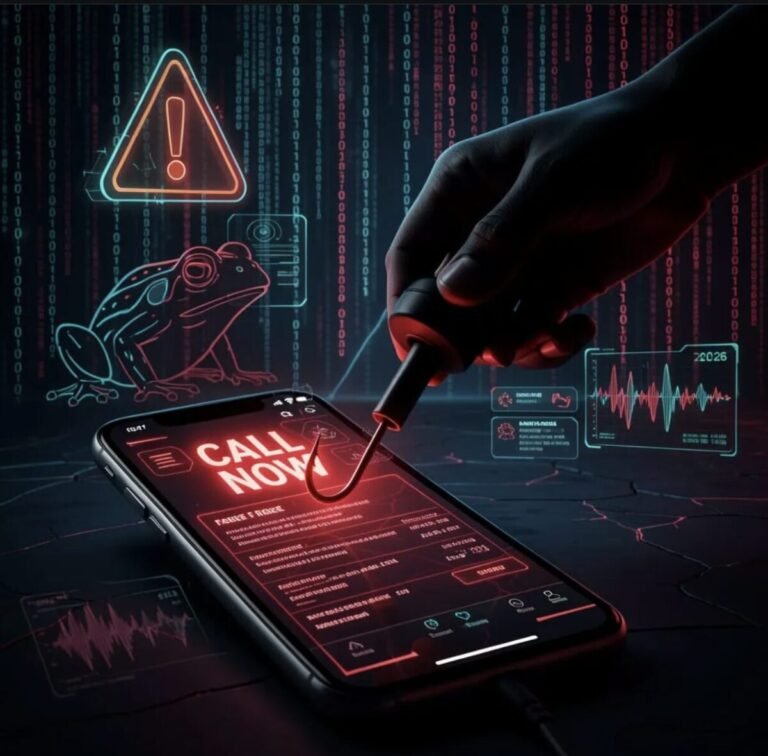
The technique is medieval — a thief takes your sealed envelope from a mailbox, soaks the check in acetone or brake fluid, lifts the payee and amount with cotton swabs, and rewrites it — but it works because the underlying paper-and-MICR system was never designed for an adversarial world. Here is what you need to know to keep paper out of the wrong hands.
How Check Washing Actually Works
Thieves work in three steps. They acquire the check, then wash it, then cash it.
Acquisition is the easy part. Outgoing mail in a residential mailbox with the red flag up is a billboard. Blue collection boxes — especially older models — can be defeated with a “fishing” technique using a sticky weight on a string, where the thief drops the weight in through the slot and retrieves whatever envelope it sticks to.
In 2024 the USPS began rolling out new high-security collection boxes with narrower slots and tamper-resistant locks, but coverage is uneven and the older boxes remain a target. Some rings also operate from the inside, paying off postal employees or temporary contract workers for envelopes they pull during sorting.
Once a thief has an envelope, washing takes minutes. Standard ballpoint ink is solvent-soluble. Brake fluid, nail polish remover, or commercial dry-cleaning fluid lifts the ink without disturbing the printed payee block at the bottom or the signature line. The thief then writes a new payee (often a mule controlled by the ring), a much larger amount, and deposits the check via mobile capture at a fresh account opened in the mule’s name.
Why Mobile Deposit Accelerates The Loss
Mobile remote deposit means a thief never needs to walk into a branch with the washed check. By the time the deposit clears and the funds move, the mule account is often closed and the cash has been spent or transferred. Recovery on a washed check, once funds are out, is rare without aggressive bank coordination — and that coordination depends on you catching the fraud quickly.
Which Checks Are Highest Risk In 2026
Not every check is equally exposed. The risk profile clusters around a few specific situations.
Rent checks sent to a property-management address are the single most-washed category. The amounts are predictable, the schedule is monthly, and a stolen check is rarely missed for weeks because tenants assume the landlord just hasn’t deposited it yet.
Utility and insurance checks are nearly as common a target. The same predictability applies, and the recipients often do not call about a missing payment until the next bill arrives. By then a thief has had a month with your account number and signature.
Gift checks and tax payments tend to be larger amounts and are sent at predictable times (graduations, weddings, holidays, mid-April). Thieves seasonally over-fish in those windows. April mailbox theft spikes every year for exactly this reason.
Business checks from small businesses are especially exposed because the signatory’s signature is often available online (on the business’s posted documents), and the printed amounts can be in the thousands. Some thieves specifically target small-business mailboxes for this reason — and a single washed business check can run five figures.
Defense Layer 1: Write Fewer Checks
The fastest way to drop your exposure is to issue fewer paper checks. In 2026, the alternatives are mature and usually free.
For monthly recurring bills — rent, utilities, insurance, mortgage — use the payee’s online billing portal or your bank’s bill pay feature. Bank-issued bill pay, where the bank actually prints and mails any unavoidable paper, still uses a check, but the check is drawn on a bank-controlled account number, not your personal one. If a bill pay check is intercepted, your personal account number is not exposed.
For person-to-person gifts under typical Zelle/Venmo limits, use the instant rail — but only to trusted, verified recipients. Read our Scam Detection game for the warning signs of P2P scams that often piggyback on gift checks.
For tax payments, the IRS supports direct debit, IRS Direct Pay, and credit-card payment processors. None of these involve a paper check in the mail.
For occasional contractor payments, ACH or Zelle to a known business account is usually faster, free, and avoids the paper exposure entirely.
Defense Layer 2: Harden The Checks You Still Have To Write
For the paper you can’t eliminate, three small changes raise the cost of washing dramatically.
Use a gel pen with pigmented, archival ink. Uni-ball “Signo 207” and similar pens use ink that bonds into paper fibers and resists the standard solvents thieves use. This is the single most effective per-check defense and costs about $3 once. The American Bankers Association has recommended this practice for years.
Fill every line and box. Write the amount in numerals tight against the dollar sign with no leading space. Write the amount in words with a line filling the rest of the row. Cross your sevens. The harder it is to extend a number or rewrite a payee, the lower your risk of a “1” becoming a “5,000.”
Drop checks at the post office counter, not in outgoing mail. Never leave an envelope in your home mailbox with the flag up, and skip the older blue boxes if you can. If you must use a blue box, drop the envelope before the last pickup of the day so it does not sit overnight.
Use a personal check with a low-numbered MICR line cautiously. Some criminals filter for low check numbers (checks numbered 100–199) as a tell that the account is newly opened and may have weaker fraud monitoring. Consider ordering checks that start at a higher number.
Skip the “memo” line shortcut. Writing “groceries” or “rent — 4B” on the memo line is harmless, but writing your account number or driver’s license number is a gift to a thief. Some payees ask for those; resist.
Defense Layer 3: Monitor Like A Hawk
You cannot prevent every washed check, but you can catch one within hours instead of weeks.
Turn on push alerts for every check that posts to your account, regardless of amount. Banks generally support this in the alerts menu. Set a daily app-checking habit — a one-minute glance at recent activity each morning. Reconcile your statement the day it arrives, not the month it arrives, and flag any check number that posts out of sequence (a thief often skips numbers from your unused stock).
For check ranges you have not used, mark them in your bank’s positive-pay or check-block feature if your account offers one. Many credit unions and small banks now offer a free “stop a check by number” option from the app — perfect for marking unused ranges as never authorized. Business banking customers should treat positive pay as mandatory.
If you mail a check and the payee has not received it within ten business days, call the payee and your bank. Do not wait for the statement.
For broader payment monitoring habits, see our travel credit-card fraud guide — many of the same routines apply to credit-card statement review.
If A Check Has Been Washed — The Recovery Sequence
The clock starts the minute you notice. Move in this order.
Step 1. Call your bank and report the forgery. Ask for the check copy and start a fraud affidavit. Federal Reg CC and UCC Articles 3 and 4 generally protect you from forged endorsements if you notify within 30 days of the first statement that shows the loss, and longer for unauthorized signatures. Your bank may need a notarized affidavit; do not delay.
Step 2. File a report with USPIS at uspis.gov/report and a report with the FBI’s IC3 at IC3.gov. USPIS, in particular, opens cases on mail theft and is the agency most likely to coordinate across multiple victims of the same ring. Add a complaint to the FTC at ReportFraud.ftc.gov.
Step 3. Place a fraud alert with the credit bureaus and consider freezing your credit. While check washing rarely escalates to identity theft directly, the criminals working washed checks often run identity-theft side hustles.
Step 4. If the washed check exposed your account number, close the account and open a new one. Routing-and-account exposure is the single largest residual risk after a washed check — criminals can use the pair to set up ACH debits against you for months.
Step 5. Update any recurring payments and direct deposits to the new account, and keep the old account open with a small balance for 60–90 days to catch any straggling debits, then close it.
Frequently Asked Questions
Does My Bank Cover A Washed Check?
Yes, in most cases, provided you report it promptly. Forged endorsements and altered amounts are covered under UCC and Reg CC when you notify within statement windows. The catch is that some banks take 30–90 days to research and reimburse, and you must follow their affidavit process exactly.
Is A Cashier’s Check Safer Than A Personal Check?
Slightly. Cashier’s checks have a known dollar amount printed in tamper-resistant ink and are issued from a bank’s own account, so a thief who washes one only exposes the bank rather than your personal account. But the underlying mail-theft risk is the same — and counterfeit cashier’s checks remain a common buyer-side scam.
Are Blue USPS Boxes Still Safe To Use?
The new high-security models with narrow slots and tamper-resistant locks are much safer than the older models. If the slot is wide enough for an envelope to drop in face-up, assume fishing risk and use the post office counter instead.
Can A Thief Actually Open A Bank Account With No Real ID?
Mule networks recruit individuals with real IDs — often students, recent immigrants, or people deceived into thinking they have been hired as “payment processors.” The mule deposits washed checks into their own real account and forwards the cleared funds. The cost of recruiting a mule is the criminal’s main bottleneck.
Should I Switch To Electronic-Only Billing Entirely?
For most households, yes. The combination of bank bill pay, ACH from utilities, and P2P to trusted recipients eliminates more than 90% of typical paper checks, and dramatically reduces washing exposure.
The Bottom Line
Check washing is not a sophisticated crime. It is a high-volume, low-effort crime that depends on consumers using ballpoint pens, leaving envelopes in unsecured mailboxes, and not reading their statements. Each of those three habits is easy to break this week. Buy a $3 gel pen, drop your mail at the counter, and turn on alerts. That trio defeats most of what you are likely to face.
Want to test your pattern recognition for related mail and payment scams? Try a quick round of Did You Know?.
For more on this topic, see U.S. Postal Inspection Service on mail fraud & check washing.
Stay In The Loop
Weekly: the 3 scams trending this week — 2-minute read. No spam.
We won't send you spam. Unsubscribe any time.